Baidyanath Temple, also known as Baba Baidyanath Dham or Baidyanath Jyotirlinga, is one of the most sacred Hindu pilgrimage sites in India. Located in Deoghar, Jharkhand, the temple is dedicated to Lord Shiva and is revered as one of the 12 Jyotirlingas. It is also believed to be one of the 51 Shakti Peethas, making it a rare place where devotees can worship both Lord Shiva and Goddess Shakti together.
Every year, millions of devotees visit Baidyanath Temple, especially during the holy month of Shravan (July–August), when pilgrims carry sacred Ganga water from Sultanganj and walk around 108 km to offer it to Lord Shiva.
Whether you are planning your first visit or simply want to know more about the temple, this guide covers everything you need to know.
Baidyanath Temple Information Table
| Details | Information |
| Temple Name | Baidyanath Temple (Baba Baidyanath Dham) |
| Other Names | Baba Dham, Baidyanath Jyotirlinga |
| Main Deity | Lord Shiva |
| Location | Deoghar |
| District | Deoghar |
| State | Jharkhand |
| Temple Type | Jyotirlinga & Shakti Peetha |
| Number of Temples | 22 |
| Main Festival | Shravani Mela, Maha Shivaratri |
| Temple Style | Nagara Architecture |
| Entry Fee | Free |
| Best Time to Visit | October to February |
| Famous For | Jyotirlinga, Kanwar Yatra, Shravani Mela |
About Baidyanath Temple
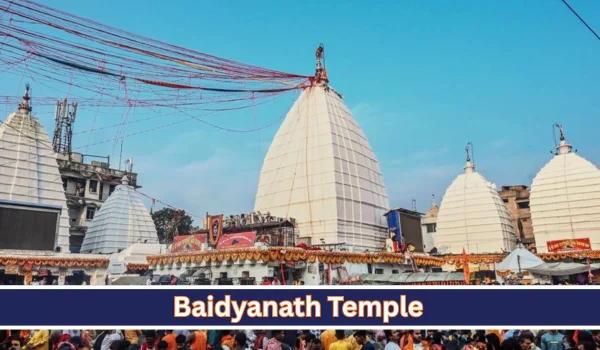
Baidyanath Temple is among the holiest Shiva temples in India. The temple complex consists of the main Baidyanath Jyotirlinga shrine along with 21 smaller temples dedicated to different Hindu deities. The temple has been attracting pilgrims for centuries and remains one of the busiest pilgrimage destinations in eastern India.
The word “Baidyanath” means “Lord of Physicians” or “Divine Healer.” Devotees believe that worshipping Lord Shiva here helps remove suffering, illness, and obstacles from life.
Why is Baidyanath Temple Famous?
The temple is famous for several reasons:
- One of the 12 sacred Jyotirlingas.
- Considered one of the 51 Shakti Peethas.
- Millions of devotees visit every year.
- Home to the famous Shravani Kanwar Yatra.
- One of India’s most important Shiva pilgrimage destinations.
- Devotees are allowed to perform Jal Abhishek themselves on the Jyotirlinga.
History of Baidyanath Temple
The exact origin of Baidyanath Temple is unknown, and historians believe it has existed for many centuries. According to historical records, parts of the current temple structure were built in the late 16th century. The temple has remained an important place of worship for generations.
The temple has survived different periods of Indian history while continuing to attract pilgrims from across the country.
Mythological Story of Baidyanath Temple
The most famous legend is connected with King Ravana.
According to Hindu mythology:
- Ravana was a great devotee of Lord Shiva.
- He performed severe penance and offered his heads one by one to please Shiva.
- Lord Shiva restored Ravana’s heads, earning the name Baidyanath, meaning the Divine Physician.
- Ravana requested Shiva to accompany him to Lanka.
- Shiva agreed but instructed him never to place the Shivling on the ground.
- During the journey, Ravana had to stop briefly and handed the Shivling to a disguised deity.
- The Shivling was placed on the ground at Deoghar and became permanently fixed there.
- Ravana tried to lift it but failed.
Since then, the place has been worshipped as Baidyanath Jyotirlinga.
Baidyanath Temple and Shakti Peetha
Apart from being a Jyotirlinga, Baidyanath Temple is also believed to be a Shakti Peetha.
According to Hindu belief:
- Goddess Sati’s heart fell at this location.
- Therefore, devotees worship both Lord Shiva and Goddess Shakti here.
- This unique combination makes Baidyanath one of India’s most spiritually significant pilgrimage sites.
Architecture of Baidyanath Temple
The temple showcases traditional Nagara-style architecture.
Highlights include:
- Approximately 72-foot-high temple tower.
- Pyramid-shaped shikhara.
- Gold vessels placed on the temple top.
- Stone construction.
- 22 temples within the complex.
- Sacred courtyard filled with smaller shrines.
The temple’s architecture is simple yet spiritually powerful.
Baidyanath Temple Timings
| Activity | Timing |
| Temple Opens | Around 4:00 AM |
| Morning Rituals | Early morning |
| General Darshan | After morning rituals |
| Evening Darshan | Until around 9:00 PM (timings may vary on festivals) |
Temple timings may change during Shravan and major festivals.
Darshan at Baidyanath Temple
Devotees can:
- Offer Ganga water.
- Perform Jal Abhishek.
- Offer Bilva leaves.
- Offer flowers.
- Participate in Aarti.
- Book special pujas where available.
Unlike many temples, devotees traditionally perform Abhishek directly on the Jyotirlinga.
Major Festivals
Shravani Mela
This is the biggest festival celebrated at Baidyanath Temple.
Highlights include:
- Held during July–August.
- Millions of Kanwariyas participate.
- Pilgrims walk 108 km from Sultanganj carrying Ganga water.
- Considered one of the world’s longest-running religious fairs.
Maha Shivaratri
Thousands of devotees gather to perform night-long prayers and worship Lord Shiva.
How to Reach Baidyanath Temple
By Air
The nearest airport is Deoghar Airport, which has flights connecting major Indian cities.
By Train
Nearest railway stations include:
- Deoghar Junction
- Baidhnathdham Junction
- Jasidih Junction
Jasidih is a major railhead with good connectivity.
By Road
Regular buses and taxis are available from:
- Ranchi
- Patna
- Kolkata
- Dhanbad
- Asansol
- Bhagalpur
Best Time to Visit
The ideal months are:
- October
- November
- December
- January
- February
Weather remains pleasant during these months. If you wish to experience the grand pilgrimage, visit during Shravani Mela, but be prepared for very large crowds.
Dress Code
Although there is no strict dress code, visitors should wear:
- Traditional Indian clothing (preferred)
- Decent and modest attire
- Comfortable footwear (to be removed before entering the temple)
Temple Rules
Visitors should:
- Maintain silence.
- Follow queue rules.
- Avoid plastic waste.
- Respect temple customs.
- Carry valid ID if required during special events.
Photography inside the sanctum is generally not permitted.
Nearby Attractions
If you are visiting Deoghar, you can also explore:
- Basukinath Temple
- Naulakha Temple
- Trikuta Hills
- Tapovan
- Satsang Ashram
- Nandan Pahar
Accommodation Near Baidyanath Temple
Visitors can find:
- Budget hotels
- Dharamshalas
- Guest houses
- Mid-range hotels
- Luxury hotels
Advance booking is recommended during Shravan and Maha Shivaratri.
Tips for Visitors
- Arrive early for a smoother darshan.
- Carry drinking water.
- Wear comfortable clothing.
- Keep cash for offerings and local transport.
- Expect long queues during festivals.
- Book accommodation in advance during peak pilgrimage season.
Frequently Asked Questions (FAQs)
Is Baidyanath Temple one of the 12 Jyotirlingas?
Yes. Baidyanath Temple in Deoghar is one of the twelve sacred Jyotirlingas of Lord Shiva.
Why is Baidyanath Temple called Baba Dham?
The temple is popularly called Baba Dham because devotees lovingly refer to Lord Shiva here as “Baba Baidyanath.”
Is Baidyanath Temple also a Shakti Peetha?
Yes. It is believed to be one of the 51 Shakti Peethas where Goddess Sati’s heart fell.
Which is the nearest railway station?
Jasidih Junction is the nearest major railway station, located around 7 km from the temple.
What is the famous Kanwar Yatra?
Devotees collect Ganga water from Sultanganj and walk about 108 km barefoot to offer it to Lord Shiva at Baidyanath Temple during Shravan.
Conclusion
Baidyanath Temple is not just a place of worship but one of India’s most spiritually significant pilgrimage destinations. Its unique status as both a Jyotirlinga and a Shakti Peetha, combined with centuries-old traditions, sacred legends, and the world-famous Shravani Kanwar Yatra, makes it a must-visit for devotees of Lord Shiva. Whether you seek spiritual peace, wish to perform Jal Abhishek, or want to experience one of India’s greatest religious gatherings, a visit to Baba Baidyanath Dham offers a deeply meaningful and unforgettable experience.