Planning a visit to a famous Vrindavan temple becomes easier when you know the darshan timings, aarti schedule, location, transport options and important visitor guidelines in advance. Shri Radha Raman Temple Vrindavan is one of the most revered temples in the holy town of Vrindavan and is dedicated to Lord Krishna worshipped as Radha Raman.
The temple has a special place in the Gaudiya Vaishnav tradition and is known for its historic deity, traditional worship practices and peaceful spiritual atmosphere. It is also counted among the seven important ancient temples of Vrindavan.
Located in the old part of Vrindavan near the Keshi Ghat area, the temple attracts devotees throughout the year. Visitors often include it in a wider Vrindavan pilgrimage covering other important temples and sacred places.
About Shri Radha Raman Temple Vrindavan
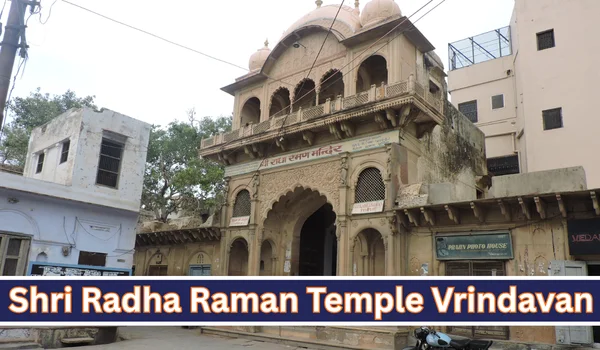
Shri Radha Raman Temple is situated in Vrindavan, Mathura district, Uttar Pradesh. The temple is traditionally associated with Gopala Bhatta Goswami, one of the prominent followers of Chaitanya Mahaprabhu.
The temple’s main deity is Sri Radha Raman, a form of Lord Krishna. According to the temple tradition, the deity manifested from a Shaligram Shila. This makes Radha Raman worship particularly significant for devotees.
The temple is also known for its traditional seva and daily worship system. Unlike large modern temple complexes, Radha Raman Temple has a relatively intimate setting, reflecting the character of old Vrindavan.
The temple is located in an area of narrow lanes, so visitors should plan the final part of their journey accordingly.
Religious Significance of Radha Raman Temple
Radha Raman means the one who gives pleasure to Radha and is a name associated with Lord Krishna.
The temple is particularly important for followers of Gaudiya Vaishnavism, who regard Radha Raman as a deeply sacred form of Krishna. The deity is traditionally believed to have manifested from a Shaligram stone through the devotion of Gopala Bhatta Goswami.
The temple continues a long tradition of daily seva, bhog, aarti and devotional worship. Visitors can experience a more traditional style of temple worship compared with some of the larger and more crowded temples of Vrindavan.
The spiritual significance of the temple comes from its history, deity worship and uninterrupted devotional traditions rather than simply its architecture.
Main Deity and Temple Highlights
The principal deity worshipped here is Sri Radha Raman Ji.
Important features associated with the temple include:
- Radha Raman Ji, the main deity of Lord Krishna
- Traditional Shaligram worship
- Daily seva and bhog rituals
- Traditional aarti ceremonies
- Association with Gopala Bhatta Goswami
- Historic temple architecture
- Connection with the ancient Vrindavan temple tradition
The temple also has a strong association with the Goswami tradition and preserves several elements of historic Vaishnava worship.
Quick Information Table
| Information | Details |
| Temple Name | Shri Radha Raman Temple |
| Also Known As | Radha Raman Mandir |
| Main Deity | Lord Krishna as Radha Raman |
| Location | Vrindavan, Mathura, Uttar Pradesh |
| Area | Near Keshi Ghat |
| Religious Tradition | Gaudiya Vaishnavism |
| Associated Saint | Gopala Bhatta Goswami |
| Temple Type | Historic Krishna Temple |
| Entry | Generally free for darshan |
| Nearest Major Railway Station | Mathura Junction |
| Nearest Airport | Agra Airport |
| Major Alternative Airport | Delhi International Airport |
| Main Travel Hub | Mathura |
| Best Time for Darshan | Morning or evening |
| Main Religious Occasions | Janmashtami, Holi, Kartik period and other Vaishnava festivals |
Shri Radha Raman Temple Timings
The Shri Radha Raman Temple Vrindavan timings can vary according to season and the daily seva schedule.
General public darshan is commonly available during morning and evening sessions.
A commonly followed schedule is:
Morning Darshan: Around 8:00 AM to 12:30 PM
Evening Darshan: Around 6:00 PM to 8:00 PM or later depending on the day’s schedule.
The temple follows a detailed daily worship routine, so the sanctum may temporarily close even during a broader darshan period for bhog, seva or other rituals.
Because timings can change during festivals and special occasions, devotees should check the current schedule before travelling.
Shri Radha Raman Temple Aarti Timings
Aarti is an important part of daily worship at Radha Raman Temple.
The daily schedule includes several devotional rituals, with timings that can vary according to season.
| Aarti or Ritual | General Timing |
| Mangala Aarti | Early morning |
| Guru Puja | Around 6:30 AM |
| Shringar Darshan | Morning |
| Noon Aarti | Around 12:00 PM |
| Evening Aarti | Around 7:00 PM |
| Shayan Aarti | Night |
The exact Radha Raman Temple aarti timing can change between summer and winter and during festivals.
Devotees specifically visiting for Mangala Aarti should pay particular attention to the seasonal schedule because the early morning timing can be very different in winter and summer.
For ordinary visitors, the evening aarti is generally easier to attend because it takes place at a more convenient hour.
Darshan at Shri Radha Raman Temple
Darshan at the temple is generally available without a regular entry ticket.
The temple follows traditional worship practices, and the deity may not remain visible continuously because the priests perform various seva and bhog rituals throughout the day.
Therefore, even if you arrive during the general temple opening period, there can be short periods when darshan is temporarily paused.
Visitors should remain patient and follow the instructions of temple staff and devotees managing the temple area.
Morning darshan is suitable for visitors who prefer a quieter spiritual experience, while evening darshan can provide a different devotional atmosphere.
How to Reach Shri Radha Raman Temple Vrindavan
By Road
Vrindavan is well connected with Mathura and other major cities of Uttar Pradesh.
Visitors can reach Vrindavan by car, taxi, bus or other local transport. From Delhi, Mathura and Agra, road travel is commonly used by pilgrims.
The temple is located in the old Vrindavan area, where lanes are narrow. Private cars may not be able to reach directly to the temple entrance.
Visitors may need to park at a suitable location and walk or use an e-rickshaw for the final part of the journey.
By Train
Mathura Junction is the nearest major railway station and the most convenient railway point for many travellers.
Mathura has railway connections with Delhi, Agra and several other major cities.
From Mathura Junction, visitors can hire an auto-rickshaw, taxi or cab to reach Vrindavan.
Mathura Cantt is another railway station in the wider area, although Mathura Junction generally provides broader connectivity.
By Bus
Regular buses and local transport connect Mathura and Vrindavan.
Visitors arriving at the Mathura bus area can continue towards Vrindavan by local bus, auto-rickshaw, e-rickshaw or taxi.
For first-time visitors, an e-rickshaw or taxi can be more convenient because the old Vrindavan lanes can be confusing.
By Air
The nearest major airport option is Agra Airport, while Indira Gandhi International Airport in Delhi offers much wider domestic and international connectivity.
From either airport, travellers can continue by road towards Mathura and Vrindavan.
For international travellers, Delhi is generally a practical arrival point because of its extensive flight connectivity.
Nearest Railway Station to Radha Raman Temple
Mathura Junction Railway Station is the main railway station for travellers visiting Shri Radha Raman Temple.
After reaching Mathura Junction, the remaining journey to Vrindavan can be completed by taxi, auto-rickshaw or local transport.
If you are travelling with elderly family members or luggage, a direct taxi from Mathura to the temple area can be more comfortable.
Parking and Local Transport
Because the temple is located in the older part of Vrindavan, parking near Shri Radha Raman Temple can be limited.
Large vehicles may not be able to enter the narrow lanes close to the temple.
Visitors travelling by private car should use an appropriate parking area outside the narrowest lanes and walk or take an e-rickshaw for the remaining distance.
E-rickshaws, cycle rickshaws and autos are widely useful for travelling around Vrindavan.
Temple Entry Rules and Dress Code
Devotees should wear clean, modest and comfortable clothing while visiting the temple.
Important points include:
- Remove footwear before entering areas where required.
- Keep mobile phones on silent mode.
- Maintain cleanliness inside the temple.
- Follow the queue and temple instructions.
- Avoid disturbing ongoing seva or aarti.
- Do not push during crowded darshan.
- Keep children under supervision.
- Keep valuables secure.
During major festivals, additional crowd-management arrangements may be introduced.
Best Time to Visit Shri Radha Raman Temple
The best time to visit Shri Radha Raman Temple depends on your preferred experience.
For a comparatively peaceful darshan, an ordinary weekday morning is a practical choice. Morning visits can also be combined with other nearby temples before the afternoon break.
Evening is suitable for devotees who want to experience the temple’s evening devotional atmosphere.
Vrindavan can become particularly busy during Holi, Janmashtami, Radhashtami, Diwali and the Kartik period. These occasions offer a special spiritual atmosphere but can also involve heavy crowds.
The winter months are generally comfortable for exploring Vrindavan on foot and visiting several temples in one day.
Major Festivals and Religious Occasions
Janmashtami
Janmashtami is one of the major celebrations connected with Lord Krishna. The temple receives many devotees during this period.
Radhashtami
Radhashtami is an important Vaishnava festival associated with the appearance of Radha. Special worship and celebrations are held across Vrindavan.
Holi
Vrindavan is famous for its Holi celebrations. During this period, the entire town becomes extremely busy, and devotees should plan accommodation and transport well in advance.
Kartik Month
The Kartik period is especially significant for Vaishnava devotees. Many pilgrims visit Vrindavan during this time for temple darshan and devotional activities.
Nearby Places to Visit
A visit to Shri Radha Raman Temple can easily be combined with other important attractions in Vrindavan.
Keshi Ghat is located in the nearby area and is one of Vrindavan’s historic sacred sites on the Yamuna.
Banke Bihari Temple is another major Krishna temple and an important pilgrimage stop.
Nidhivan is a well-known sacred place associated with Vrindavan’s devotional traditions.
ISKCON Temple Vrindavan is another popular destination for Krishna devotees.
Prem Mandir is also frequently included in Vrindavan sightseeing plans, particularly for its evening illumination and large temple complex.
Since several important temples are located within the broader Vrindavan area, visitors can plan a full-day pilgrimage itinerary.
Facilities for Visitors
Visitors can find basic facilities in the surrounding Vrindavan area, including:
- Drinking water
- Local food stalls and restaurants
- Prasad shops
- E-rickshaws and autos
- Hotels and guesthouses
- Dharamshalas
- Shops selling religious items
Because the temple is situated in an old and busy part of Vrindavan, visitors should not expect large modern parking facilities immediately outside the temple.
Hotels and Dharamshalas Near Radha Raman Temple
There are many accommodation options in Vrindavan, ranging from budget guesthouses and dharamshalas to hotels and larger properties.
Visitors looking for hotels near Shri Radha Raman Temple can consider staying around the old Vrindavan area if temple visits are the main purpose of the trip.
For travellers who prefer easier road access and modern facilities, accommodation in other parts of Vrindavan can also be considered.
During Holi, Janmashtami and other major festivals, rooms can fill quickly, so advance booking is advisable.
Important Tips for First-Time Visitors
Keep these practical points in mind:
- Check the current darshan and aarti schedule before travelling.
- Arrive early if you want to attend an important aarti.
- Expect short breaks in darshan because of seva and bhog rituals.
- Wear comfortable footwear for walking around Vrindavan.
- Be prepared for narrow lanes near the temple.
- Keep valuables secure in crowded areas.
- Avoid carrying unnecessary luggage into the temple area.
- Plan accommodation early during festivals.
- Keep sufficient time if visiting several Vrindavan temples.
- Follow the temple’s instructions regarding photography and mobile phones.
Photography and Mobile Rules
Photography and mobile-phone restrictions can vary depending on the temple area and ongoing rituals.
Visitors should follow the instructions given by temple authorities and avoid using flash near the deity or during important ceremonies.
Do not allow photography to disturb other devotees or ongoing seva.
It is better to keep mobile phones on silent and give priority to darshan and worship.
FAQs
Where is Shri Radha Raman Temple located?
Shri Radha Raman Temple is located in Vrindavan, Mathura district, Uttar Pradesh, in the old Vrindavan area near Keshi Ghat.
What are Shri Radha Raman Temple Vrindavan timings?
General morning darshan is commonly available around 8:00 AM to 12:30 PM, with evening darshan generally beginning around 6:00 PM. Timings can vary according to the daily seva schedule and season.
What is the Radha Raman Temple aarti timing?
The temple conducts several daily rituals. The evening aarti is generally around 7:00 PM, while early morning Mangala Aarti is held according to the seasonal schedule.
Is there an entry fee at Shri Radha Raman Temple?
Normal temple darshan is generally free. Special seva or religious services, where applicable, may have separate arrangements.
What is the nearest railway station to Radha Raman Temple?
Mathura Junction is the nearest major railway station and is commonly used by visitors travelling to Vrindavan.
How far is Radha Raman Temple from Mathura?
The temple is located in Vrindavan, which is roughly 10 to 15 km from central Mathura depending on the starting point and route.
Is Radha Raman Temple different from Radha Krishna temples?
Yes. The temple is specifically dedicated to Radha Raman Ji, a form of Lord Krishna associated with the devotional tradition of Gopala Bhatta Goswami.
Can senior citizens visit Radha Raman Temple?
Yes, but visitors should consider the narrow lanes and walking involved near the temple. An e-rickshaw can reduce some of the walking distance, although the final stretch may still require walking.
What is the best time to visit Radha Raman Temple?
For a comparatively comfortable visit, a weekday morning is a practical option. Festival periods are spiritually significant but can be much more crowded.
Are hotels available near Radha Raman Temple?
Yes. Vrindavan has hotels, guesthouses, dharamshalas and other accommodation options. Booking ahead is recommended during major festivals.
Conclusion
Shri Radha Raman Temple Vrindavan is one of the important historic temples of Vrindavan and holds a special place in the devotional tradition of Lord Krishna worship. Its association with Gopala Bhatta Goswami, traditional seva practices and the sacred Radha Raman deity make it an important destination for pilgrims visiting Braj.
The temple follows a structured daily worship routine, with morning and evening darshan along with several aarti and seva periods. Since the deity may not remain available for continuous public darshan during every minute of the opening period, checking the day’s schedule is useful before planning the visit.
For a comfortable pilgrimage, visitors should plan transport carefully, especially because the temple is situated in the narrow lanes of old Vrindavan. Mathura Junction provides convenient railway connectivity, while e-rickshaws and local transport are useful for reaching the temple area.
Whether you are visiting Vrindavan for the first time or returning as part of a Braj pilgrimage, Shri Radha Raman Temple offers an opportunity to experience the historic devotional traditions of this sacred town.